
Quick Links
Why it is important to monitor your horse’s bodyweight and condition?
There are many different reasons why keeping a close eye on your horse’s bodyweight and body condition is important. One of the reasons it is is the best way to gauge the effectiveness of a feeding program. If your horse is maintaining bodyweight then it is a clear indication that they are receiving enough energy for the work being done. If they are losing weight then an increase in energy intake is required. Equally if they are looking too well it is time to act! Having an accurate weight for your horse also helps to ensure they are receiving enough forage in their diet, particularly if they are on a restricted ration to help promote weight loss.
What is the difference between a horse’s weight and body condition score?
There are two parameters by which a horse can and should be monitored which are body weight and body condition. In recent years, ‘body fat scoring’ is the term increasingly being used to replace ‘equine body condition score’. This is because it more accurately reflects what is being measured than what a horse body condition score implies.
How do I measure my horse’s bodyweight?
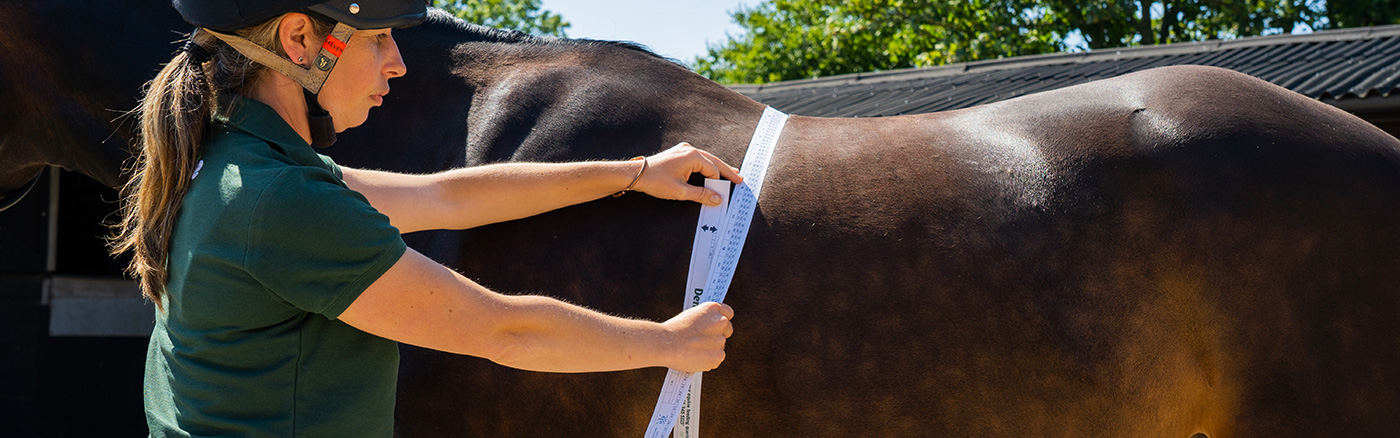
Your horse’s bodyweight can be measured using a weigh bridge or a weigh tape. Although weigh tapes do give a rough guide to your horse’s weight, Dengie have conducted studies that have found that they vary by 20% or more from weighbridge readings, generally underestimating bodyweight especially on bigger horses. Weigh tapes should therefore be used to measure relative changes in your horse. If their weight is going up and they are overweight your weight loss plan clearly isn’t working and further changes are required!
Weigh tape your horse every 2 weeks
- Use the same weigh tape each time you assess your horse
- Make sure your horse is stood square on a flat surface when taking a measurement
- Use the weigh tape at the same time of day, as your horse’s weight will fluctuate throughout the day
- Weight loss of 0.5 – 1% of bodyweight weekly is realistic. This equals 2.5 – 5kgs a week or 0.5 – 0.75kgs a day for a 500kgs horse
How can I get an accurate weight of my horse?
At Dengie, we provide a weighbridge service which can be a great opportunity for horse owners to compare their own weigh tape with an accurate weighbridge reading. For further information or to book a yard visit with the Dengie Nutrition Team click here.
How do I measure my horse’s body fat score?
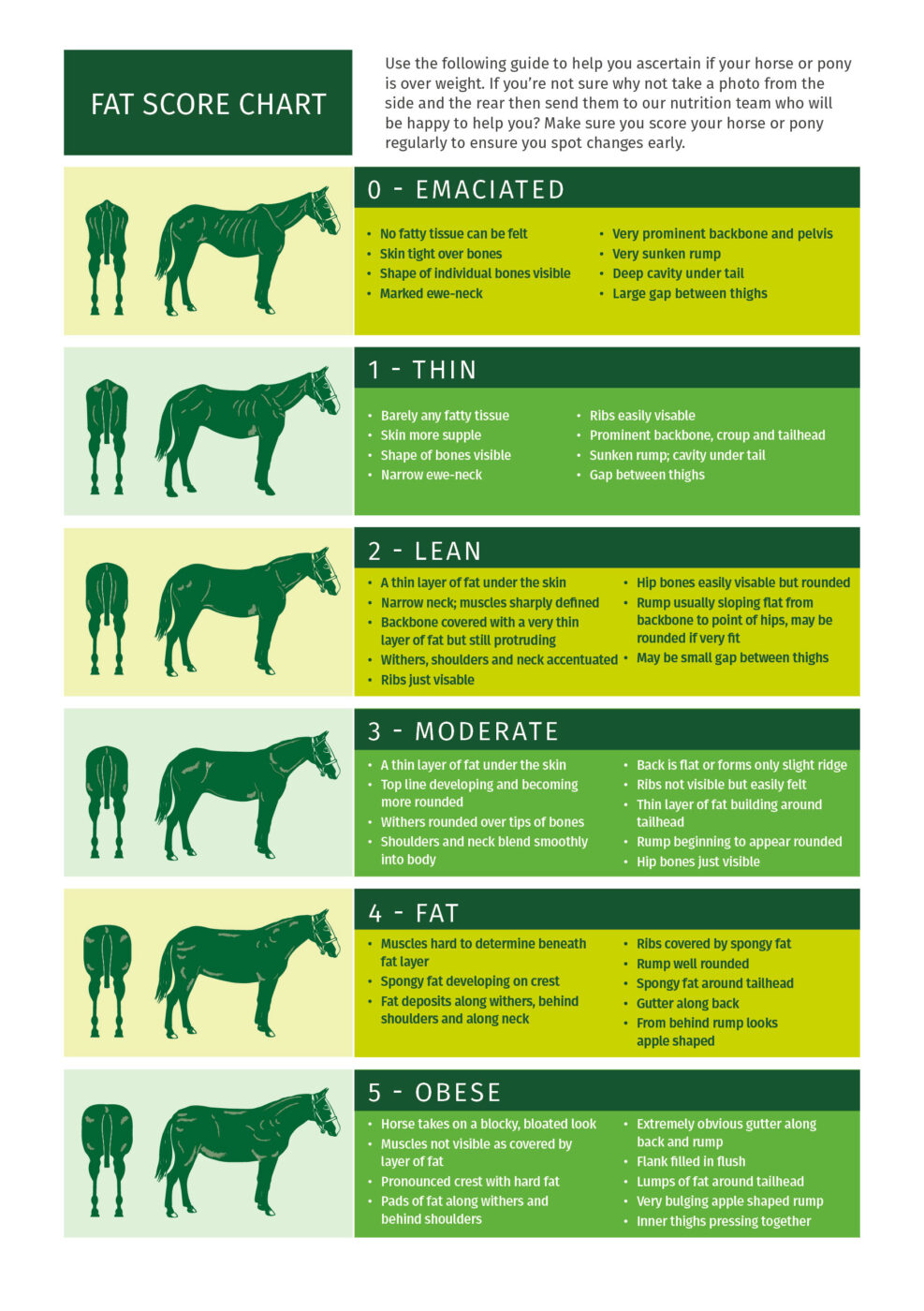
Body fat scoring (previously known as horse body condition score) is generally considered a better indication as to whether your horse is at a healthy weight. As an example, two horses could both weigh 500kg on a weighbridge, the first with a body fat score of 3 on a 0-5 scale and the second with a body fat score of 5. Although the two horses weigh exactly the same, the first horse has a much healthier body fat score and the second is very overweight. It is the body fat score in this instance that tells us how healthy the horse actually is and if there are any changes that need to be implemented in their ration.
If you find assessing your horse’s body fat score difficult, watch our video below. Ultimately, all you need to determine from a horse’s fat score is whether the horse is overweight and needs to go on a weight loss plan.
Condition or fat score – every month
- Choose a scale (0 – 5 or 1 – 9)
- Score your horse in the key areas where fat is stored and then calculate an average
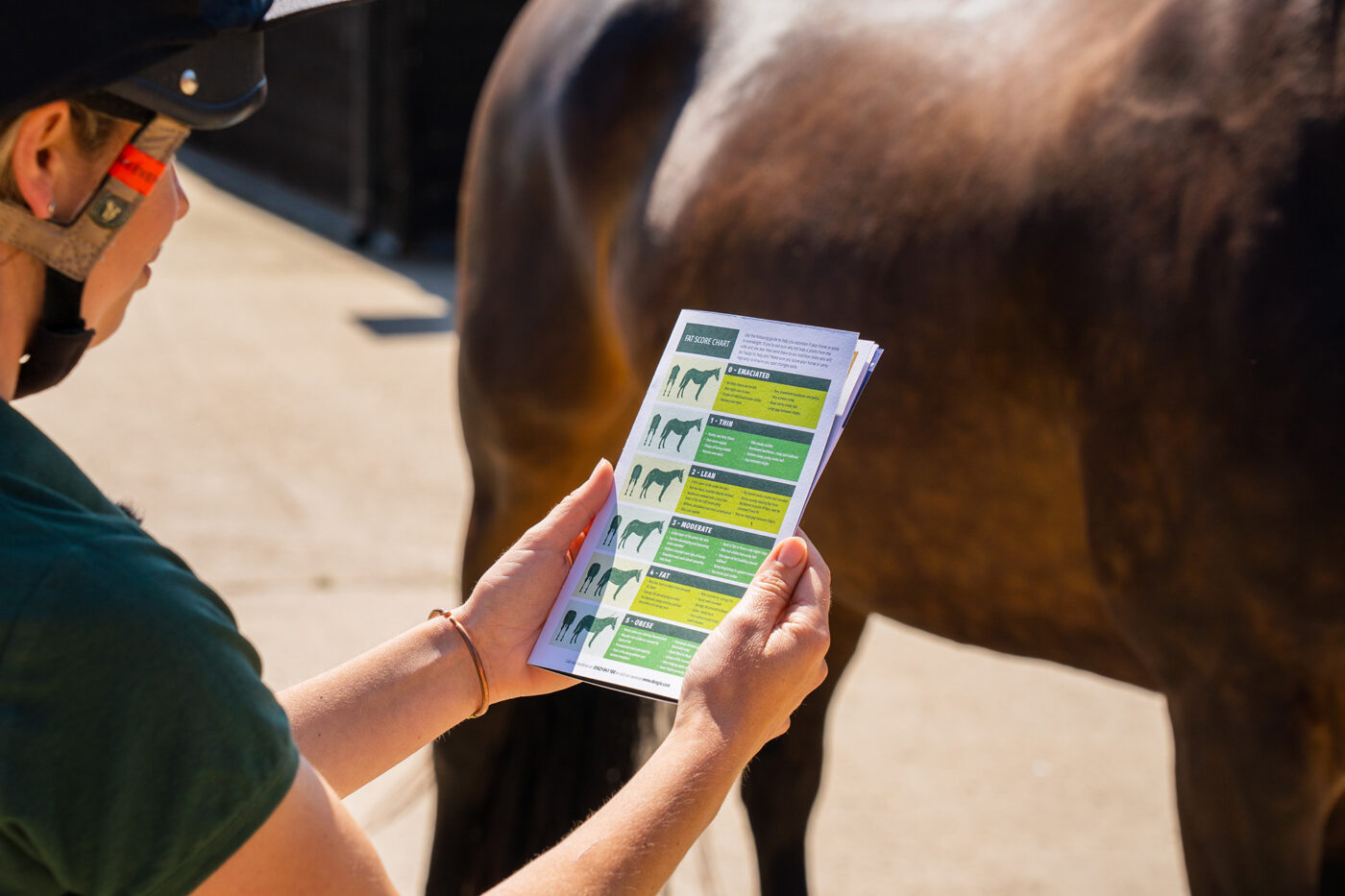
- Use a pictorial guide to help you, click here to download the Dengie Fat Score Chart.
- Why not work with a friend and score each other’s horses to see how you compare?
- For an average horse it is estimated that to change ½ a condition score (0 – 5 scale) requires weight losses of 20 – 30kg which will take 4 to 6 weeks to achieve
Record your horse’s data
Recording your horse’s data and progress is really useful. Apps such as the University of Glasgow’s Equi-BCS app which is free to download, can be used to record body weight, fat scores and photos of your horse all in one place. This information (previously referred to as equine body condition score) can also be shared from the app so you can send it to the Dengie nutrition team.
Alternatively you can plot your horse’s weight on a graph like the one below. Time needs to go along the x axis and bodyweight on the y axis and the weight can be added each time you measure it. Adding data year on year can help you to see how your horse’s weight fluctuates throughout the year. If your horse is holding but not gaining weight in the summer months, that may be considered a success and then the winter months are usually when further weight loss might be easier to achieve.
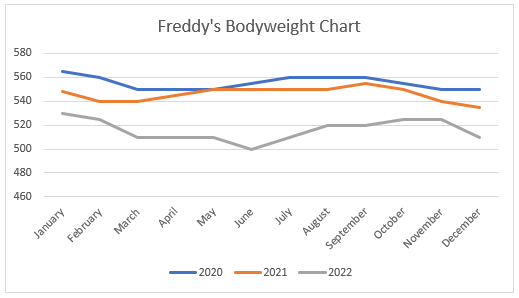
An example of how a horse’s bodyweight can be plotted and compared year on year
Our Weight Management Guide
One of the most significant risk factors for laminitis is obesity. If you want to reduce your horse or pony’s risk of getting laminitis it is essential that you maintain them at a healthy weight. We know this is not always easy; studies have shown that horse owners tend to underestimate their horse’s body fat score and think they are thinner than they are. Finding the balance between giving enough fibre to maintain a healthy digestive system without promoting weight gain can be tricky.
Click here to view our Weight Management Guide to learn more about managing your horse’s weight and which products in the Dengie range are suitable for those prone to laminitis.